
One97 Communications Ltd (OCL), the company that operates the Paytm brand, posted a consolidated loss of Rs 539.8 crore in the fourth quarter of 2024-25 (Q4FY25), slightly lower from the Rs 549.6 crore it reported in Q4FY24. Sequentially, the fintech company's loss widened from Rs 208.3 crore in Q3FY25 on account of a one-time exceptional expense amounting to Rs 522 crore during the quarter ended March 2025.

Anmol Singh Jaggi and Puneet Singh Jaggi, once hailed as rising stars in India's clean energy sector, are now facing serious regulatory action.

An hour-long disruption could affect around 40 million UPI transactions.

The US Trade Representative noted that India's average applied tariff rate stood at 17% per cent, the highest of any major world economy.

'The introduction of a reasonable MDR for large merchant transactions will allow the industry to continue investing in innovation, cybersecurity, grievance redressal, and merchant support, ultimately ensuring that UPI continues to thrive.'

'The only solution is for the government to allow us to charge a low controlled MDR of 25 bps on UPI P2M transactions only for merchants with more than a Rs 40 lakh turnover.'

The entire construction of the Navi Mumbai airport project is expected to be completed in five phases.
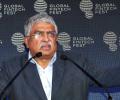
'Binary fission will happen -- startups will lead to more startups.'

'Balancing tunnel developments with ecological realities is a major challenge and, when overlooked, can contribute to mishaps.'

It is the first airport in the country to have multi-modal connectivity. This includes a linkage to the project via road, rail, and a metro system.

Non-banking entities such as fintech firms will have to tap into use cases beyond peer-to-peer (P2P) and peer-to-merchant (P2M) transactions to scale up the presence of the retail version of the central bank digital currency (CBDC), which is also known as the e, said industry players. These use cases will enable programmable transactions across domains, including the government's direct benefit transfer (DBT) schemes, with subsidies restricted to specific purposes such as food coupons, hospital bills, fertilisers, pesticides, and cross-border remittances.

Dream11, Baazi Games, Zupee and WinZO among others are invited for the discussion with the anti-money laundering watchdog.

The average Indian works 46.7 hours per week, surpassing even China's 46.1 hours. In some sectors, the numbers are even more staggering.

'We have to be prepared for the larger disruption that is likely to take place.'
Currently there are 26 licensed players in the P2P lending sector but only 10-11 are actively operating.
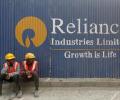
Oil-to-telecom conglomerate Reliance Industries Ltd (RIL) has surprised the street with a better than expected performance in its oil-to-chemicals (O2C) division in October-December 2024 (Q3FY25). RIL executives attributed it to favourable feedstock sourcing and higher volumes. However, they also listed cost optimisation and other measures.

Some of India's largest conglomerates are gearing up to either commission or commercially start the first phase of their new energy projects this year, according to company executives and analysts.

Fintech firm BharatPe is targeting an initial public offering (IPO) in the next 18-24 months with the company expecting profitability at an earnings before interest, taxes, depreciation and ammotisation (Ebitda) level for FY25, chief executive officer (CEO) Nalin Negi said.

Fast-moving consumer goods (FMCG) companies are expected to witness pressure on volumes in the October-December quarter. However, price hikes will help push up revenues, said brokerages.For India's largest engineering firm, Larsen and Toubro (L&T), the analysts expect a 20 per cent growth in consolidated revenue, and an 8.1 per cent core business Ebitda margin, up 40 bps from a year ago.

Widespread use of crypto assets, including stablecoins, can have a negative impact on the macroeconomic and financial stability of a country, the Reserve Bank of India (RBI) said on Monday. In its Financial Stability Report (FSR), the banking regulator highlighted that excessive use of crypto assets can reduce effectiveness of monetary policy, worsen fiscal risks, circumvent capital flow management measures, divert resources available for financing the real economy and threaten global financial stability.
